

Waterproof clothing labels often come with a number that looks reassuringly scientific: 5,000mm, 10,000mm, 20,000mm or even 30,000mm. But what do those figures actually mean? Is a 20,000mm jacket twice as waterproof as a 10,000mm one? And why can a supposedly waterproof shell still leave you damp after a wet day in the hills?
The answer lies in hydrostatic head. It is one of the most useful measurements for comparing waterproof fabrics, but it is also one of the easiest to misunderstand. Here is how waterproof ratings work, what the numbers tell you, and why they are only part of the story when choosing outdoor kit.
What does hydrostatic head mean?
Hydrostatic head measures how much water pressure a fabric can withstand before water starts to pass through it. The result is usually expressed in millimetres, written as something like 10,000mm HH.
In a laboratory, a sample of fabric is clamped beneath a vertical tube. The tube is gradually filled with water, creating increasing pressure on the material. The height of the water column is measured when the first three drops of water appear on the underside of the fabric. If that happens when the column is 10,000mm high, the fabric receives a hydrostatic head rating of 10,000mm.
Put simply, a 10,000mm fabric can withstand the pressure created by a 10-metre column of water before leaking under the test conditions.
That does not mean the jacket can be submerged 10 metres underwater. It also does not mean you can stand in torrential rain for exactly 10 hours. Hydrostatic head is a controlled pressure test, rather than a direct prediction of real-world performance.
Why is water pressure important outdoors?
Rain does not usually fall with enough pressure to force its way through a good waterproof fabric. However, pressure increases when you sit, kneel, lean against a rock or carry a heavy rucksack.
Imagine walking through a wet mountain pass. The rain is landing on your shoulders, but your backpack is pressing against the fabric from the other side. At your hips, the waistband of a rucksack may compress the jacket even further. When you kneel on wet ground, the pressure beneath your knees can be much greater than the pressure caused by falling rain.
This is why a jacket that performs perfectly during a gentle stroll may struggle when used under a loaded pack in persistent rain. The fabric is not simply dealing with water; it is dealing with water combined with friction, compression and movement.
The same applies to tents. A groundsheet or tent floor experiences considerable pressure when you kneel or sit inside the shelter. A fabric with a relatively modest hydrostatic head may keep rain out from above, yet allow moisture through when your weight is concentrated on one small area.
How are waterproof ratings tested?
There is no single universal test used by every manufacturer. Different brands may use different standards, equipment and testing methods. Some test the raw fabric, while others test a finished garment or a fabric that has already been washed and abraded.
This matters because a waterproof jacket is more than its face fabric. It may include a membrane, coating, lining, seam tape, zips, pockets, cuffs and a hood. The weakest component can determine how dry you remain.
A fabric might achieve a 20,000mm rating in the laboratory, but the completed jacket may perform differently once it has been stitched, seam-sealed, packed into a rucksack and worn repeatedly. Manufacturing tolerances also matter. Two jackets made from similar materials can behave differently because of their construction.
When comparing products, treat the hydrostatic head figure as a useful guide rather than an absolute guarantee. A higher number generally suggests greater resistance to water pressure, but it does not automatically mean a better jacket in every situation.
What do the common ratings mean?
There is no perfect industry-wide chart, but the following categories offer a practical starting point:
- Below 5,000mm: Suitable for light showers and everyday use, particularly when there is little pressure on the fabric. It may not be enough for prolonged rain or demanding mountain conditions.
- 5,000mm to 10,000mm: A reasonable level for commuting, walking and occasional outdoor use. It can cope with moderate rain, although pressure from a pack or extended exposure may test it.
- 10,000mm to 20,000mm: A versatile range for hiking, running and general British mountain weather. A well-designed garment in this range can offer strong all-round protection.
- 20,000mm and above: A high level of water resistance intended for sustained rain, snow and more demanding conditions. It is often found on technical shells, expedition clothing and premium tents.
These figures should not be treated as strict rules. A 10,000mm jacket with excellent seams, a well-fitting hood and a durable design may keep you drier than a poorly constructed 20,000mm jacket.
Is a higher rating always better?
Not necessarily. Waterproof clothing is a balancing act between protection, breathability, weight, durability and price.
Increasing the hydrostatic head may involve a thicker coating or a more substantial membrane. That can improve resistance to water pressure, but it may also increase weight or reduce breathability. A highly waterproof fabric can still feel clammy if the jacket cannot release enough moisture vapour during hard exercise.
There is also the question of how you intend to use the garment. A runner moving quickly in light rain may prioritise low weight and ventilation over extreme hydrostatic head. A winter mountaineer carrying an axe and a heavy pack will need far greater protection against compression, abrasion and prolonged exposure.
For many hikers, a reliable 10,000mm to 20,000mm shell is a sensible middle ground. It offers substantial protection without turning every outing into an exercise in wearing a portable plastic bag.
Hydrostatic head versus waterproofing
Hydrostatic head is not the same thing as a waterproof rating in the broadest sense. It measures resistance to water pressure through the fabric, but waterproof performance depends on several other features.
Seams: Every stitch creates tiny holes in the material. Fully taped seams prevent water from travelling through these points. A jacket with a high-rated fabric but poorly sealed seams will not remain waterproof for long.
Zips: Water-resistant or waterproof zips can make a significant difference, especially on chest pockets and front openings. A covered zip may provide good protection, while an exposed standard zip can become a weak point.
Hood and cuffs: A close-fitting hood with useful adjustments helps stop rain entering around your face and neck. Adjustable cuffs prevent water running up your sleeves, particularly when using trekking poles.
Design: Longer jackets, storm flaps and well-placed pockets can all improve protection. A jacket that rides up whenever you lift your arms may expose your lower back, regardless of its laboratory rating.
Durability: Abrasion from shoulder straps can damage a membrane or coating. Regular folding, dirt and body oils can also affect performance over time.
What about breathability?
Waterproof clothing must deal with moisture from both sides. Rain needs to stay out, but sweat vapour needs to escape. This is where breathability becomes important.
Breathability is measured in several ways, often using a moisture vapour transmission rate or a resistance to evaporative heat loss. Unfortunately, these tests are not always directly comparable between brands, so breathability figures should be treated with some caution too.
A waterproof jacket can be technically breathable and still feel wet inside. If the weather is warm, your exertion level is high or the air is already saturated with moisture, sweat will struggle to evaporate. No membrane can perform magic when you are climbing a steep path in humid conditions.
Ventilation is therefore just as important as the headline breathability figure. Look for pit zips, a two-way front zip, adjustable cuffs and a hood that can be loosened when conditions improve. Sometimes the most effective waterproofing strategy is simply opening a zip before you overheat.
Why do waterproof jackets wet out?
“Wetting out” happens when the outer face fabric becomes saturated with water. The rain may no longer bead and roll away; instead, it spreads across the surface like a thin film.
When this happens, the jacket may still be waterproof, but its breathability can drop sharply. The saturated outer fabric makes it harder for moisture vapour to escape, so condensation builds up inside. This can feel exactly like a leak, even when water has not passed through the membrane.
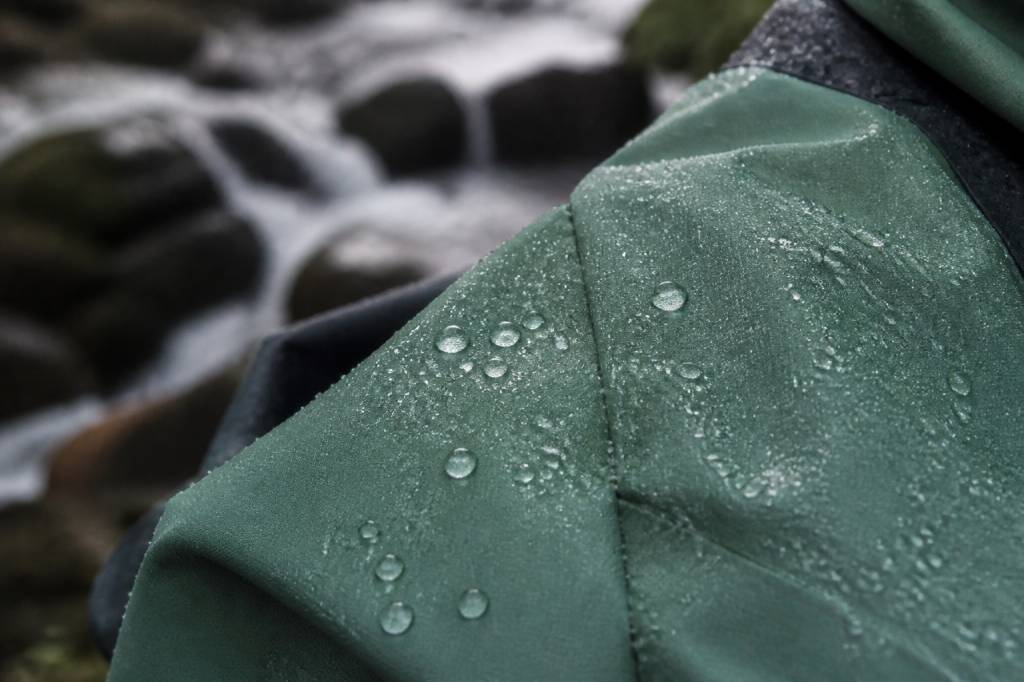
Most new waterproof jackets have a durable water repellent treatment, or DWR, on the outer fabric. This encourages water to bead up and run off. DWR does not provide the main waterproof barrier, but it helps the garment function properly.
Dirt, body oils, detergent residue and abrasion can reduce the effectiveness of the treatment. Washing the jacket according to the care instructions and periodically renewing the DWR can restore much of its performance. Avoid ordinary fabric softener, as it can damage technical fabrics and leave residues behind.
How much hydrostatic head do you need?
The right rating depends on your activity, the weather you expect and how much pressure the fabric will face.
- For everyday use: Around 5,000mm to 10,000mm may be sufficient for commuting, dog walking and short trips in ordinary rain.
- For day hiking: A rating of 10,000mm or more is a sensible target, especially if you regularly walk in exposed or wet areas.
- For backpacking: Look for at least 15,000mm to 20,000mm, alongside strong seam construction and durable fabric around the shoulders and hips.
- For winter and alpine use: A higher rating can be valuable, but pay equal attention to hood design, glove-friendly adjustments, ventilation and abrasion resistance.
- For tents: A higher hydrostatic head is particularly useful for the floor, where knees, elbows and kit create concentrated pressure. The flysheet also needs to cope with wind-driven rain and prolonged exposure.
Think about your worst likely day rather than your best one. If your favourite route crosses open moorland with no shelter, choosing a little extra protection may be worthwhile. If you mainly walk in local woodland and can retreat to a café after an hour, you may not need expedition-level specifications.
How to keep waterproof performance high
Even the best-rated waterproof fabric needs sensible care.
- Follow the manufacturer’s washing instructions and use a cleaner designed for technical clothing.
- Avoid fabric softener, bleach and harsh biological detergents.
- Keep the jacket clean, as dirt can affect both breathability and water beading.
- Renew the DWR treatment when water stops forming beads on the surface.
- Dry the garment fully before storing it, but avoid excessive heat unless the care label specifically allows it.
- Check seam tape, zips and cuffs for damage before heading into serious weather.
- Do not store the jacket compressed in a stuff sack for weeks at a time.
It is also worth checking whether your rucksack is causing the problem. A pack cover, waterproof liner or dry bags can protect the contents, but they will not stop pressure from affecting the jacket beneath the shoulder straps. Adjusting the pack so that it sits correctly can reduce rubbing and improve comfort.
The number is useful, but the whole jacket matters
Hydrostatic head gives you a clear way to compare fabrics, and it is especially valuable when shopping for a shell, pair of waterproof trousers or tent. However, it should never be the only specification you consider.
Look at the construction, seam taping, hood, cuffs, zips, ventilation and durability. Consider how hard you work, how long you stay outside and whether you will carry a pack. A jacket is a system, not just a sheet of fabric with an impressive number attached to it.
For most outdoor adventures, the best choice is not necessarily the garment with the largest hydrostatic head figure. It is the one that offers enough water resistance for your conditions, vents effectively when you are moving, fits properly and is durable enough to earn its place in your kit bag.