

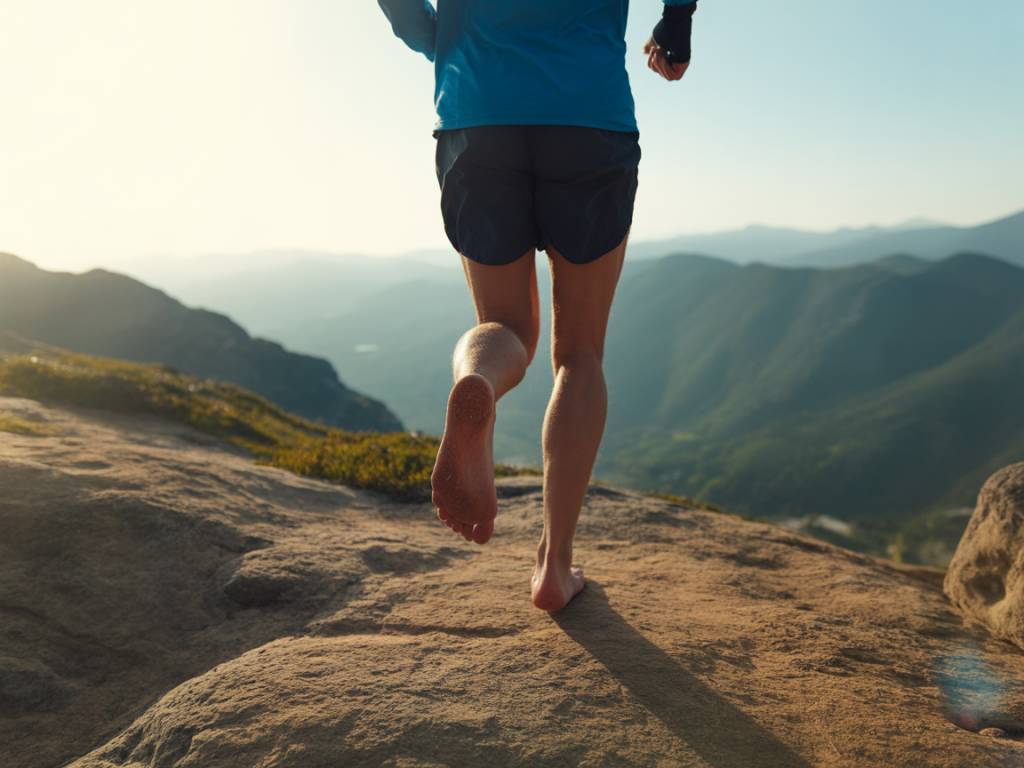
Barefoot trail running used to be a fringe experiment reserved for ultra-minimalist purists. Today it’s quietly becoming mainstream. More runners are slipping out of their cushioned shoes and feeling the ground again. Some are searching for better performance. Others want fewer injuries, stronger feet, or simply more connection to nature.
But here’s the thing. Trail running barefoot or in minimalist shoes is not just “running without shoes.” It changes how your body loads impact, how your muscles work, and how your brain processes every step. Done well, it can be liberating. Done badly, it can sideline you for months.
This guide walks you through the benefits, the risks, and a practical, safe transition plan. Designed for beginners. Written for real-world trails, not laboratory treadmills.
Barefoot Trail Running Benefits: Strength, Technique, and Sensation
The first time you step onto a trail barefoot or in minimalist shoes, everything feels sharper. Roots, rocks, pine needles, gravel. You suddenly realize how blunt your usual shoe cushioning has made your senses.
That increased sensory input isn’t just a novelty. It can deliver meaningful benefits.
Key barefoot trail running benefits include:
On trails, your feet must constantly adapt. Micro-adjustments keep you upright on loose stones, roots, and off-camber singletrack. Barefoot or minimalist running amplifies those adjustments. Your brain receives more information from the ground and responds by firing stabilizing muscles more efficiently.
Over weeks and months, this can improve your balance, agility, and coordination. Many runners notice a shift to a lighter, quicker cadence and a more forefoot or midfoot strike. Cushioning no longer eats up feedback, so you instinctively stop overstriding. Instead of smashing your heel into the ground, you let your foot land under your center of mass. It’s a subtle change. It’s also powerful.
There’s also a mental payoff. Barefoot trail running forces presence. You can’t zone out. You scan the path, pick your line, and commit to each step. For many outdoor athletes, that focused, meditative state is the real prize.
Risks of Barefoot Trail Running for Beginners
However, the same factors that make barefoot trail running exciting also make it risky if you rush. Your tissues adapt slowly. Your enthusiasm won’t protect your metatarsals or Achilles tendons.
Common barefoot and minimalist running risks include:
On trails specifically, you also face uneven ground, hidden roots, and sharp stones. Traditional trail shoes mask much of this. Barefoot running puts it front and center. That’s both the beauty and the danger.
The most frequent mistake? Doing too much, too soon. Your cardiovascular system is usually far ahead of your structural readiness. You feel fit, so you keep going. But your bones, tendons, and ligaments quietly accumulate micro-damage, until something fails.
Another overlooked risk is cold. Bare feet or thin minimalist shoes on wet, cold trails can quickly numb your toes. When sensation drops, your form deteriorates and your risk of tripping or stepping badly goes up.
How to Transition Safely to Barefoot Trail Running
If you’re used to cushioned trail shoes with aggressive lugs and a high heel-to-toe drop, think of barefoot trail running as a new sport. You’re not just adjusting footwear. You’re re-training your neuromuscular system from the ground up.
Golden rules for a safe transition:
Start on forgiving surfaces. Grass. Smooth dirt. Packed sand. These allow your feet to relearn natural patterns without being punished by sharp rocks. Early on, focus more on drills and short bouts rather than full runs.
Think in minutes, not kilometers. A typical first week might include only 5 to 10 minutes of barefoot or minimalist running at a time. You’ll feel ridiculous. That’s normal. You’re teaching your body a new language.
Choosing Barefoot and Minimalist Gear for Trail Use
Pure barefoot on trails is possible but rarely practical for beginners. A more sustainable path usually involves minimalist trail shoes or huarache-style sandals with thin but tough soles.
What to look for in minimalist trail footwear:
If your current trail shoe has a significant heel drop (8–12 mm is common), you can also use an intermediate shoe first. Drop to 4–6 mm for a transition period. Then move to zero drop and more flexible soles over time.
Socks matter too. On trails, thin merino or synthetic toe socks can reduce blister risk, especially in minimalist shoes where toes move more freely. For sandals, consider footbed texture. Some materials grip better when wet and muddy than others.
Foot and Lower-Leg Strength for Barefoot Trail Running
No amount of clever gear replaces strong, resilient feet and lower legs. Before you start true trail sessions, invest a few weeks in strength and mobility work. You can do most of it at home, barefoot on a firm surface.
Useful exercises to build barefoot running resilience:
Train these two to three times per week. The goal is not fatigue, but control. Smooth, controlled reps beat heavy loading. You want your feet to become articulate and strong, not just tired.
A Beginner-Friendly Barefoot Trail Running Progression
The timeline below is a sample framework. Adjust it for your history, injury status, and trail difficulty. If in doubt, go slower. Your ego will survive. Your bones will thank you.
Phase 1 – Adaptation on Soft Surfaces (2–4 weeks)
Phase 2 – Introduce Easy Trails (3–6 weeks)
Phase 3 – Gradual Volume and Terrain Progression (6–12 weeks)
Remember, these phases can stretch. There is no prize for reaching “full minimalist” fastest. Many successful runners keep a mixed rotation of cushioned and minimalist shoes, choosing the right tool for the day’s terrain, distance, and fatigue level.
Essential Barefoot Trail Running Technique Cues
Switching to minimalist shoes without adjusting your technique is a recipe for trouble. Pay attention to how, and not just how far, you run.
Technique cues that work well on trails:
On descents, shorten your stride and increase cadence. Don’t lean back and brake hard with your heels; this overloads the quads and can hammer your joints. Instead, allow a slight forward lean, use quick steps, and trust your feet to dance over obstacles.
Common Barefoot Trail Running Mistakes to Avoid
Most problems arise from simple, predictable errors. Avoid these and you’re already ahead of the curve.
Mistakes that derail many beginners:
Another trap is chasing speed too early. Barefoot trail running initially makes you slower. That’s fine. Speed returns once your tissues and neuromuscular system adapt. Treat the first few months as skill acquisition, not performance hunting.
Is Barefoot Trail Running Right for You?
Barefoot and minimalist trail running is a tool. Not a religion. Not a magic cure. For some, it becomes the primary way to run. For others, it’s just one element in a wider toolkit that includes cushioned shoes, hiking boots, and everything in between.
You might be a good candidate if you’re patient, curious, and willing to experiment. If you enjoy learning new movement skills. If you like the idea of stronger feet and more direct contact with the ground. On the other hand, if you are currently dealing with serious foot pathologies, advanced arthritis, or long-standing tendon issues, it’s wise to consult a sports-savvy medical professional or physiotherapist before making big changes.
Used intelligently, barefoot trail running can reconnect you with the terrain in a way thick midsoles never will. The forest floor stops being a vague surface somewhere under your shoes. It becomes vivid and textured again. Every rock, root, and patch of loam becomes part of a conversation between your body and the trail.
Approach that conversation with respect. Build strength methodically. Progress gradually. Choose your gear with intention. Then let your feet, and the trail, do the teaching.